
Key Takeaways
- A genetic eye bag concern may be linked to inherited facial anatomy, including cheek support and tear trough depth.
- Having hereditary eye bags does not necessarily mean you are tired or unhealthy. Structural fullness can be present even in younger adults with good lifestyle habits.
- Sleep deprivation, allergies, fluid retention, and high-salt meals may worsen temporary puffiness but are not the underlying cause of persistent under-eye bags.
- Eye creams may support hydration, skin texture, and the appearance of fine lines, but they are unlikely to correct prominent under-eye fat or deeper hollows fully.
- A consultation at a medical aesthetic clinic can help distinguish between puffiness, fat protrusion, pigmentation, hollowing and skin laxity before considering treatment options.
Common Myths About Genetic Eye Bags
Myth: Eye Bags Always Mean You Are Tired
Reality: Eye bags can be associated with fatigue or poor sleep, but persistent lower-eyelid fullness may also be related to inherited anatomy, ageing changes, or skin laxity.
A person may look tired despite being well-rested if they naturally have prominent under-eye fat pads, deeper hollows or darker shadows around the lower eyelid.
Myth: Eye Creams Can Completely Remove Inherited Under-Eye Bags
Reality: Eye creams may help support hydration, improve the appearance of fine lines and provide temporary comfort for dry skin. However, topical products are unlikely to reduce structural fat protrusion or reshape inherited facial anatomy significantly.
For persistent eye bags, skincare may form part of an overall routine, but it is not always enough as a standalone solution.
Myth: Young Adults Cannot Have Eye Bags
Reality: Inherited eye bags can appear in younger adults and, in some cases, may be noticeable as early as the teenage years, especially when there is a family history of eye bags.
When lower eyelid fullness is influenced by facial structure or fat distribution, age alone is not a reliable indicator of whether someone may experience eye bags.
Myth: Nothing Can Be Done If Eye Bags Run in the Family
Reality: Genetics cannot be changed, but the appearance of the under-eye area may sometimes be improved with an approach that addresses the specific contributing factors.
The right option depends on whether the concern is mainly caused by fat protrusion, hollowing, pigmentation, laxity, skin quality or a combination of these.
Why Do Some People Develop Eye Bags Earlier Than Others?
Eye bags are a common aesthetic concern, often associated with tiredness, stress or ageing. However, some people notice under-eye puffiness or shadows from a relatively young age, even when they are well-rested and follow a consistent skincare routine.
You may have heard comments such as:
- “I have had eye bags since I was young.”
- “Everyone in my family has them.”
- “Sleeping more does not seem to change how they look.”
In these situations, genetics and inherited facial structure may play a role. A person may inherit features that make fullness, hollows or shadows beneath the eyes more noticeable. This does not mean that there is one specific “eye bag gene”, but family traits can influence how the under-eye area looks over time.
Understanding what is actually causing the concern is important. What appears to be an eye bag may involve fat protrusion, volume loss, pigmentation, loose skin, temporary fluid retention or a combination of several factors.
What Are Eye Bags?
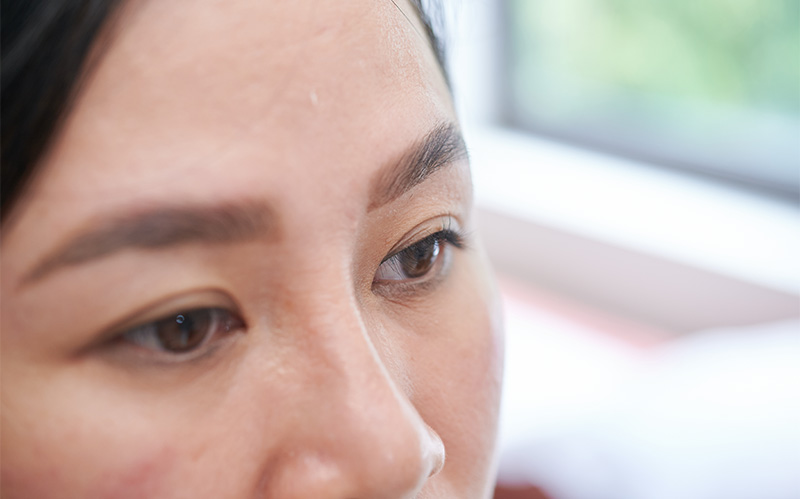
Eye bags generally refer to visible puffiness, fullness or swelling beneath the lower eyelids. They may make the eyes appear tired, heavy or less refreshed.
Depending on the individual, eye bags may appear as:
- Under-eye bulges
- Puffy lower eyelids
- Lower eyelid heaviness
- Shadows beneath the eyes
- A hollowed or sunken transition between the lower eyelid and cheek
- Loose skin or fine creasing around the under-eye area
However, it is important to recognize that not all under-eye concerns are the same and may require different treatments.
For example, someone with dark circles due to pigmentation may need a very different approach from someone with prominent lower-eyelid fat pads. A consultation with our doctor may also help in differentiating between concerns that are commonly mistaken for eye bags, such as tear-trough hollowing, pigmentation, vascular darkness, and skin laxity.
How Genetics Can Influence Eye Bags
Inherited Under-Eye Fat Distribution
Fat pads naturally sit around the eyes to provide cushioning and support. In some individuals, these fat pads may be more prominent or positioned in a way that creates visible lower eyelid fullness.
This may explain why some people develop a genetic eye-bag appearance earlier in life or notice that similar under-eye puffiness runs in their families.
Prominent fat pads may become more noticeable over time as the tissues around the eyes change with age. However, they can also be visible in younger adults, particularly where inherited facial anatomy makes the lower eyelid-cheek transition more pronounced.
Facial Bone Structure and Cheek Support
The shape of the cheekbones, mid-face and lower orbital area can affect how light falls across the under-eye region.
For example, deeper tear troughs, reduced cheek projection or a more defined lower eyelid-cheek junction may create shadows that make eye bags look more obvious. In some cases, the issue is not significant puffiness alone, but the contrast between a fuller lower eyelid and a hollow area beneath it.
This is why two people with similar amounts of lower eyelid fullness may look very different. Facial proportions and surrounding volume can affect the overall appearance of the under-eye area.
Skin Thickness and Elasticity
Inherited skin characteristics may also affect the visibility of the under-eye area. Thinner skin can make blood vessels, underlying tissue and darker shadows more noticeable.
Skin elasticity and collagen quality may also influence how the lower eyelid looks over time. As the skin becomes less firm with age, pre-existing under-eye fullness, hollows or shadows may become more noticeable.
Genetics vs Lifestyle: What Actually Causes Eye Bags?
One common myth is that eye bags are caused entirely by late nights or stress. While lifestyle factors can influence the under-eye area, they are not always the root cause.
Temporary puffiness may be aggravated by:
- Inadequate sleep
- Allergies or nasal congestion
- High-salt meals
- Alcohol intake
- Crying
- Dehydration
- Heat and humidity
- Fluid retention
These factors may cause the under-eye area to look more swollen on certain days. However, they may not remove or create the structural appearance of hereditary eye bags.
A person with genetically prominent lower eyelid fat or deeper tear troughs may still have visible eye bags despite getting enough rest, staying hydrated and maintaining a healthy routine. Lifestyle changes can support the overall appearance of the skin, but they may have limited effect on inherited under-eye structure.
Can Genetic Eye Bags Be Treated?
Genetic eye bags may sometimes be improved, but treatment planning should begin with a careful assessment rather than a one-size-fits-all solution.
A doctor may consider factors such as:
- The degree of lower eyelid fat protrusion
- Tear trough depth and under-eye hollowing
- Mid-face volume and cheek support
- Skin thickness and elasticity
- Pigmentation and vascular darkness
- Facial proportions
- Previous aesthetic treatments
- Your preferred level of improvement
The aim is usually to create a smoother and more balanced lower eyelid-cheek transition, rather than attempting to erase every natural under-eye feature.
When Fat Protrusion Is the Main Concern
Prominent lower eyelid fat pads may create a visible bulge beneath the eyes. In these cases, skincare alone may offer limited improvement.
Selected non-surgical approaches may focus on improving the surrounding facial balance or softening the contrast between the lower eyelid and upper cheek. However, where fat protrusion is significant, surgery may sometimes be the more appropriate option.
Lower blepharoplasty is a surgical procedure that may involve removing or repositioning excess fat and, where needed, addressing loose skin around the lower eyelid. Surgical suitability should be assessed carefully, as the eye area is delicate and treatment carries potential risks.
Hollowing Makes Eye Bags Look More Noticeable
Some people have mild lower eyelid fullness combined with a deeper tear trough or reduced mid-face support. The resulting shadow may make the eye bag appear more prominent than it actually is.
For suitable individuals, treatment may focus on improving the transition between the lower eyelid and cheek through carefully planned volume support. This is not suitable for every under-eye concern, particularly where there is significant puffiness, fluid retention or pre-existing lower eyelid laxity.
Under-eye filler treatment requires careful case selection. The under-eye area has complex anatomy, and inappropriate treatment may worsen swelling or create an unnatural contour.
Skin Quality and Laxity Are Contributing Factors
Ageing-related changes in collagen and skin elasticity may contribute to fine lines, creasing and loose lower eyelid skin. Where skin quality is a contributing factor, selected aesthetic treatments may be considered to support collagen remodelling or improve the appearance of texture and fine lines.
Depending on suitability, this may include treatments such as:
- Collagen-stimulating procedures
- Energy-based skin tightening treatments
- Laser skin rejuvenation
- Skin quality treatments
- Carefully selected injectable treatments for facial balance
These aesthetic treatments may help improve the overall appearance of the under-eye area, but results vary depending on the underlying anatomy and the severity of the concern.
When Should You Seek a Professional Assessment?
You may wish to consider an assessment at a medical aesthetic clinic in Singapore if:
- Your eye bags remain visible despite lifestyle changes.
- Under-eye puffiness has become more noticeable over time.
- You are unsure whether the issue is caused by puffiness, pigmentation, hollows or loose skin.
- Over-the-counter skincare products have not made a meaningful difference.
- The under-eye area affects how refreshed or confident you feel
It is also important to seek medical attention promptly if swelling is sudden, painful, one-sided, associated with redness, vision changes or other new eye symptoms. These signs may not be related to cosmetic eye bags and should be assessed appropriately.
Eye Rejuvenation at Dr Valentin Low
At Dr Valentin Low, under-eye concerns are assessed according to each individual’s facial anatomy, skin condition, and the factors contributing to their under-eye appearance.
Rather than treating all under-eye concerns in the same way, a consultation may consider whether the issue is related to fat protrusion, volume loss, skin laxity, pigmentation, facial balance or a combination of several concerns.
Depending on suitability, treatment planning may focus on:
- Improving the tear trough and lower eyelid-cheek transition
- Supporting facial balance and mid-face proportions
- Improving skin texture and under-eye quality
- Encouraging collagen remodelling where appropriate
- Reducing the appearance of shadows that create a tired-looking appearance
For individuals with more significant fat protrusion or lower eyelid laxity, a referral for surgical assessment may be more appropriate than non-surgical treatment.
The goal is to achieve an improvement that looks balanced and natural, while recognising that inherited under-eye features may be softened rather than completely removed.
Contact us to arrange a consultation and discuss suitable treatment options for eye bags, inherited under-eye bags or persistent under-eye puffiness.
Frequently Asked Questions
Are eye bags hereditary?
Eye bags may have a hereditary component. Inherited traits such as fat distribution, skin thickness, cheek structure and tear trough depth can affect how prominent the under-eye area appears.
Can a genetic eye bag disappear with better sleep?
Better sleep may reduce temporary puffiness, particularly if the under-eye area looks worse after late nights or poor rest. However, sleep is unlikely to fully remove structural under-eye fullness caused by inherited facial anatomy.
Are eye creams useful for hereditary eye bags?
Eye creams may support hydration, fine lines and skin texture. However, they are unlikely to fully correct prominent fat pads, deeper tear troughs or other structural contributors to inherited under-eye bags.
Is filler suitable for genetic eye bags?
Filler may be considered for selected individuals with hollowing or a pronounced tear trough. It is not suitable for every type of eye bag, especially where there is significant fat protrusion, swelling or lower eyelid laxity.
 Dr Valentin Aesthetic And Laser Clinic Sg