Key Takeaways
- Declining oestrogen can contribute to dryness, reduced elasticity, thinner skin and more visible fine lines.
- Menopause skin concerns vary, so treatment should be based on the changes affecting each individual.
- Skin boosters may support hydration, while collagen-stimulating treatments may gradually improve firmness and texture.
- Ultrasound and laser treatments can address different layers and concerns, rather than serving as interchangeable options.
- A medical consultation is important before treatment, particularly when skin symptoms are sudden, severe or accompanied by other health changes.
Understanding Skin Changes During Menopause
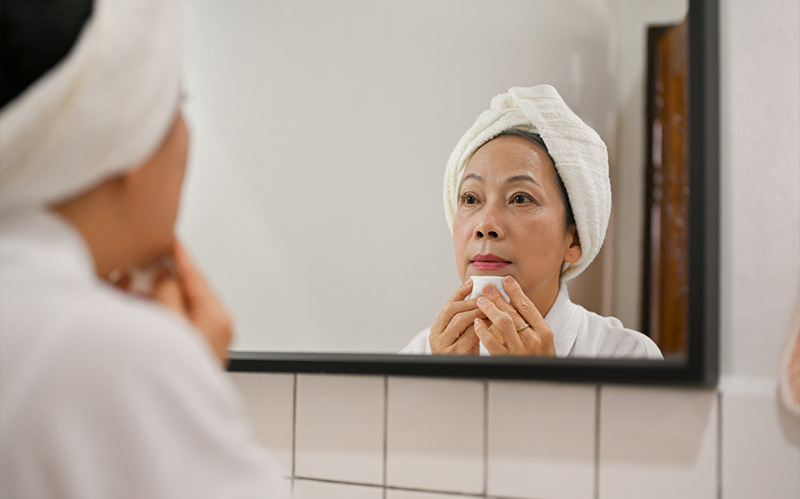
Menopause is a natural biological stage involving significant hormonal changes. Although symptoms such as hot flushes and changes to the menstrual cycle are more widely discussed, many women also notice that their skin begins behaving differently.
For example, menopause skin may feel drier, thinner or more sensitive than before. Fine lines may become more visible, facial contours may appear softer and pigmentation accumulated through years of sun exposure may become increasingly noticeable.
These concerns are not necessarily caused by poor skincare. They are partly associated with hormonal skin ageing, particularly the decline in oestrogen that occurs during menopause.
Oestrogen contributes to collagen production, elasticity, hydration, skin thickness and repair. As levels fall, the skin may lose moisture and structural support more quickly, contributing to dryness, wrinkling and reduced resilience.
Why Menopause Skin Changes Can Feel Sudden
Some women find that their usual skincare routine no longer produces the same results. A moisturiser that was previously sufficient may not relieve dryness, while products that were once well tolerated may begin causing irritation.
This can be frustrating, especially when the visible changes appear within a relatively short period. However, skin changes during menopause are not a sign of neglect or personal failure. They reflect biological changes taking place beneath the surface.
Common concerns include:
- Persistent dryness or rough texture
- Reduced firmness around the cheeks and jawline
- Fine lines and deeper folds
- Increased sensitivity
- Uneven pigmentation or age spots
- Slower recovery after irritation
Not everyone experiences these concerns to the same degree. Genetics, sun exposure, smoking, nutrition, stress, skincare habits and general health can all influence how the skin changes.
Aesthetic Treatments To Provide Support
Aesthetic treatments cannot stop menopause or prevent natural ageing. However, selected treatments may help address concerns such as dehydration, collagen loss, uneven tone and mild skin laxity.
The appropriate approach depends on whether the main concern is located at the skin surface, within the dermis or in deeper structural layers.
Skin Boosters for Hydration and Skin Quality
Skin boosters are injectable treatments intended to support hydration and overall skin quality rather than substantially reshape facial features.
Depending on the formulation used, they may help improve:
- Dry or crepey-looking skin
- Fine dehydration lines
- Rough texture
- Dullness
- Reduced suppleness
They may be considered when dryness and declining skin quality are more prominent than sagging. Results and treatment schedules vary, so suitability should be assessed by a doctor.
Collagen Laser Treatments for Texture and Firmness
Controlled laser energy can be delivered into targeted skin layers to encourage skin renewal and support collagen activity over time. A laser treatment to boost collagen may be considered for concerns such as fine lines, rough texture, enlarged pores or mild loss of firmness.
Improvements usually develop gradually as the skin remodels. The type of laser, energy settings and expected downtime should be selected according to the patient’s skin condition and treatment goals.
Laser treatment may also be combined with a separate pigmentation-focused approach when uneven tone is a significant concern. However, not every pigment responds to the same device, making an accurate assessment important.
Ultrasound Treatment for Mild Skin Laxity
When reduced structural support is causing mild sagging or softer facial contours, ultrasound-based treatment may be considered.
Ultherapy PRIME treatment uses microfocused ultrasound with visualisation to deliver energy at selected depths beneath the skin. This is intended to stimulate collagen regeneration and support gradual improvement in areas such as the jawline, lower face and neck.
It does not remove excess skin or reproduce the outcome of surgery. Results also depend on the degree of laxity, facial anatomy and the body’s individual collagen response.
Supporting the Skin Between Treatments
Daily care remains important even when aesthetic treatment is used. A supportive routine may include:
- A gentle cleanser that does not leave the skin feeling tight
- A moisturiser containing barrier-supporting ingredients
- Daily broad-spectrum sunscreen
- Gradual introduction of active skincare products
- Avoiding excessive exfoliation when the skin is sensitive
- Sufficient sleep, balanced nutrition and smoking avoidance
More products are not always better. As sensitivity increases, simplifying the routine may be more helpful than repeatedly adding strong active ingredients.
Why Personalised Treatment Planning Matters
There is no single treatment programme for menopause skin because the dominant concern differs from person to person.
Someone experiencing mainly dryness and fine texture changes may require a different approach from someone whose main concern is deeper laxity. In some cases, a staged plan may combine treatments with complementary roles, such as improving hydration first before addressing pigmentation or firmness.
At a medical aesthetic clinic in Singapore such as Dr Valentin Low Aesthetic & Laser Clinic, doctors can assess a patient’s skin condition, facial features, treatment history, lifestyle considerations and tolerance for downtime before making recommendations.
Aesthetic treatment should also be distinguished from medical management of menopause. Persistent itching, unexplained rashes, severe dryness, sudden hair loss or other significant symptoms may require assessment by an appropriate medical practitioner.
Supporting Your Skin Through Menopause
At Dr Valentin Low Aesthetic & Laser Clinic, we take the time to understand how menopause skin changes are affecting you before recommending treatment. By assessing your skin condition, facial structure and aesthetic goals, we can determine whether concerns such as hydration, pigmentation, texture or laxity should be prioritised.
Contact us to arrange a consultation and discuss treatments that may support healthier-looking skin through menopause and beyond.
Frequently Asked Questions
At what stage of menopause can skin treatments begin?
Treatment may be considered during perimenopause, menopause or postmenopause when concerns arise. The decision should be based on the skin’s condition rather than age alone.
Can aesthetic treatments restore the collagen lost during menopause?
Treatments may stimulate new collagen activity, but they cannot restore the skin permanently to its earlier state. Results are gradual and vary between individuals.
Which aesthetic treatment is most suitable for menopause skin?
There is no universally suitable option. Skin boosters may be considered for hydration, lasers for selected texture or pigmentation concerns and ultrasound treatments for mild laxity.
Can several aesthetics treatments be combined?
They may be combined or performed in stages when they address different concerns. The sequence and interval should be planned by a doctor to reduce unnecessary irritation or overtreatment.
Are results of aesthetic treatment permanent?
No. Hormonal ageing, sun exposure and natural collagen decline continue over time. Maintenance may be recommended depending on the treatment and individual response.
 Dr Valentin Aesthetic And Laser Clinic Sg